 Every Dallas Cowboys player in the NFL 1000, graded and ranked by the B/R Scouting Department. Search the list or cut it by position. Rookies to be graded separately.Player photos: AP Images
959DAL 31 Otito Ogbonnia55Grade
Two years ago, Ogbonnia was supposed to replace Poona Ford on the Los Angeles Chargers' defensive line. However, the 2022 fifth-round pick failed to meet expectations in Los Angeles, especially as a run defender. He's a two-down player by nature, but needs to take a big step this season in Dallas.
958DAL 30 Nate Thomas56Grade
Thomas made four starts at left tackle during his second professional season, while also seeing spot duty at right tackle. He displayed intriguing physical traits but unreliable execution. Thomas is a big, stout tackle with heavy hands and good in-line power, allowing him to uproot defenders when he catches them on his track during double-team feeds, angle-drive blocks and climbs. He also presents enough build-up speed to lead around the edge and help secure perimeter lanes. His technique remains robotic and raw, though. Thomas will drop his eyes at the point of attack when the picture changes, cross his feet when expanding against high-side rushes and lose cleanly when forced into recovery mode. His worst reps are glaring enough to keep him below everyday-starter level. After missing his entire rookie season with a knee injury and entering the league as an inexperienced lineman, his power profile does leave room for development.
931DAL 29 Marquez Valdes-Scantling57Grade
Marquez Valdes-Scantling offers depth to the wide receiver room with the size/frame to play multiple positions. His speed makes him a functional deep threat, and that's the role that best utilizes his talents. He's more of a WR4/5 at this point of his career but can step in and bring a big-play threat to the offense occasionally.
874DAL 28 Luke Schoonmaker60Grade
It hasn't been a smooth career for Luke Schoonmaker, and sometimes that happens when players get drafted based on traits. The flashes of athleticism, ball skills, and yards after the catch are still there every now and then, but for a player who looked like he'd be a valuable blocker at the next level, he's gone the other way. The former Wolverine doesn't sustain blocks, overruns his targets, and gets manhandled at the point of attack. Schoonmaker hasn't developed as a receiver, and while technically the second tight end to Jake Ferguson last season, his job isn't guaranteed.
873DAL 27 KaVontae Turpin60Grade
KaVontae Turpin serves as the primary return specialist for the Dallas Cowboys while rotating in on offense. His speed and quickness allow him to flip field position as a returner at any moment. He averaged 26 yards per kick and 5.5 yards per punt return. On offense, he is the primary motion pre-snap and will take the top off the defense for vertical shots from the slot. Turpin takes hands off out of the backfield and on WR reverses. He isn't WR1, WR2, or WR3, but he has a clear role and excels in it.
839DAL 26 Shavon Revel Jr.61Grade
Starting and ending your rookie season with injuries makes it tough to grow as a player on the field, but Shavon Revel showed enough to grow on during year one. He played in seven games, starting five, and while the movement looked inconsistent, particularly in his backpedal, he was getting more comfortable before his injury against the Commanders. He's a willing tackler who wants to play a physical brand of football at the line of scrimmage and through the route. He'll need to clean up the technique as he matures; with five penalties in seven games, that's just not going to fly. With a change in the defense coming in Dallas, Revel will be one to watch.
794DAL 25 Terence Steele62Grade
Steele is a long, linear and powerful right tackle whose best value comes in the run game. He has enough explosiveness and play-strength to cover up, widen and displace defenders on base, down and double-team blocks, and his length allows him to cast a wide net when walling off targets on the move. However, his movement profile is more straight-line than reactive, which limits his ability to redirect, recover or stay balanced once his feet stall. The issue shows up most clearly in pass protection, where his frame, length and heavy hands can disrupt closely aligned rushers early, but wider alignments and higher-end athletes consistently stress his range, timing and recovery. Steele can still stymie power when he lands first meaningful contact, but he gives up too many clean losses when rushers force him to protect space or adjust late. His run-blocking and physicality still carry value, but the pass-protection ceiling is capped enough to place him closer to a role-specific starter than a stable, every-week tackle.
723DAL 24 Ryan Flournoy64Grade
Ryan Flournoy isn't an elite physical specimen or athlete, but he understands how to play wide receiver effectively. He shows the ability to get open against different coverages and to process quickly post-snap to sit his route when given free releases. Flournoy has incredibly reliable hands and rarely drops the football. He didn't combat physical press coverage well or counter it with top-end speed. Flournoy is a solid starting WR3 who can take advantage of favorable matchups.
669DAL 23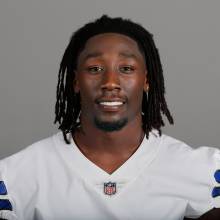 DeMarvion Overshown65Grade
Unfortunately, injuries have been the story of Overshown's career so far. He suffered a torn ACL that forced him to miss his entire rookie season, and the Texas product endured a gruesome injury in the other knee the following year. The latter caused him to miss the majority of the previous campaign, and a concussion cut year three even shorter. Overshown is an impressive athlete who has shown decent chops as a coverage linebacker during his limited time on the field. However, it's hard to give him a thorough evaluation at this stage. This will be the first season the 2023 third-round pick didn't have to spend the offseason rehabbing a major injury, so there's a chance he could quickly climb up the ranks.
657DAL 22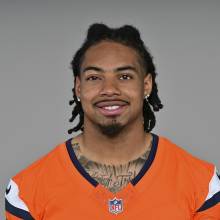 PJ Locke66Grade
PJ Locke underwent a risky spinal fusion surgery last offseason that not only improved his everyday life but also kept him on the field. Typically more of an agent of chaos, Locke is a defender who will fly downhill to deliver a big hit whenever possible. He outleveraged himself too often and would take too long to pass off routes, allowing more space for catches underneath and to vacate space. His range on the backend is still there, but he looked uncomfortable in space last season and more reactionary than anticipatory. Locke reunites with Christian Parker in Dallas as a depth piece for a new-look secondary.
644DAL 21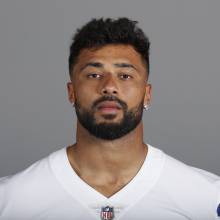 Brevyn Spann-Ford66Grade
The Cowboys' run game was a big part of their success last season, and they should have included Brevyn Spann-Ford in their plans more than they did. He's a physical run blocker who wants to punish defenders whenever he gets the chance. There are moments when he uproots players in line and delivers big hits, but he needs to work on his hand usage to stay engaged more often. Spann-Ford flashes in the passing game with big gains down the seam and using his big frame to make catches over the middle of the field, but he isn't a consistent presence. If Spann-Ford can earn more reps this season, he could take a step forward and help the Cowboys' offense even more.
591DAL 20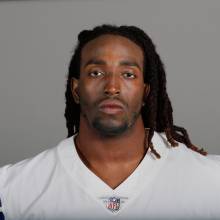 Tyler Guyton67Grade
Guyton started 11 games as a rookie and 10 last season, with injuries keeping him out of practice and slowing much-needed developmental reps. Guyton entered the league as a one-year starter with high-end physical tools and a raw skill set, which remains largely where he sits entering Year 3. He has a prototypical frame, build and athletic ability. As a result, he displays good natural power, flashing as a twitched-up, physical blocker who can clear the pocket when uncovered, dent down linemen on double-team feeds and engulf rushers once latched. He has also started incorporating changeup sets, including three-step short, to disrupt rushers' timing. Though his posture, balance, footwork and hand usage remain volatile, especially against counters or post-snap movement in the run game. His ceiling remains considerable, but he needs sustained health and reps to refine his technique.
528DAL 19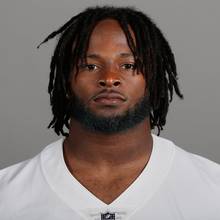 Javonte Williams68Grade
Javonte Williams is a downhill hammer and physical running back. He becomes a bowling ball with momentum when he attacks north and south. Williams runs through tackles and excels after initial contact. He averaged 3.9 yards after contact per carry, per NFL Next Gen Stats. Williams is a functional, at-best, checkdown option in the passing attack. He's an ok pass protector who gives full effort. He is not a high upside back, but he fills the functional starting role admirably.
507DAL 18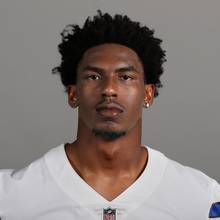 DaRon Bland69Grade
It's been quite the fall for DaRon Bland, who was an All-Pro in 2023 after a record-setting season. But two foot surgeries later, on the same foot, he doesn't look like the same player. He still does a nice job in "catch" technique and off coverage with communication, but his change of direction and drive on the ball isn't the same. Putting him in space didn't work much last season, with Bland struggling in zone coverage. The footwork that allowed him to be a menace at the catch point and jump routes for interceptions and pick-sixes has disappeared, but there's hope he will be healthy to start 2026 and return to form in a new defense.
473DAL 17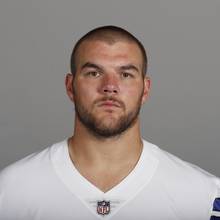 Hunter Luepke70Grade
Hunter Luepke is an unsung hero for the Dallas Cowboys offense. He does multiple things to push them forward. Luepke catches and runs the football effectively to be more than a blocking fullback. As a blocker, he is super reliable in pass protection and creating lanes for the ball carrier. His lead blocking can improve by hitting his target more going forward. Luepke is a good starting fullback and overall football player.
440DAL 16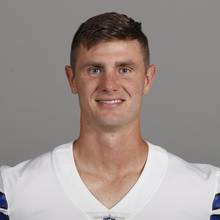 Brandon Aubrey70Grade
Aubrey's ascension as the NFL's top specialist is nothing short of spectacular. The former MLS first-round pick-turned-USFL hopeful worked his way into a three-time All-Pro honoree (two second-team nods). While known for his big leg, Aubrey didn't miss a field-goal attempt from inside 50 yards during the 2025 campaign, with only one missed extra point. He continues to be one of the game's best weapons, while complementing one of the league's best offenses.
425DAL 15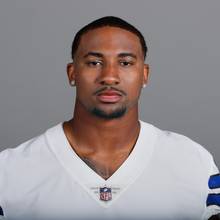 Donovan Ezeiruaku71Grade
While Ezeiruaku only had two sacks as a rookie, he showed more promise in year one than the box score says. The Boston College product's quickness and athleticism stood out, and his hand usage was impressive to record a few wins with a handful of moves. He just needs to be more consistent and finish to boost the sack number moving forward. Ezeiruaku will probably never become a major factor as a run defender, but he used his skill set well to make a handful of plays last year and build more momentum heading into 2026.
410DAL 14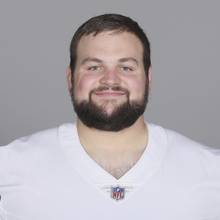 Cooper Beebe71Grade
Beebe started 11 games in 2025 while working around an ankle injury. When available, he remained a rock-solid presence along the interior. Beebe's game is driven by a stout build and very good play-strength, allowing him to absorb and generate force at a high level. He roots his feet quickly to anchor on command, has the power to uproot down linemen and processes well enough to sort movement and pass off games. He is closer to an average athlete, but efficient angles help him stay on schedule in the run game. However, his sawed-off build can create short corners when isolated in protection and separation issues against hulking nose tackles. Flanked by two of the league's more powerful guards with schematic and QB continuity in place, Beebe is in an ideal spot to maintain a high floor and maximize his full potential in Dallas.
391DAL 13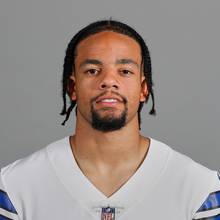 Cobie Durant72Grade
After a very successful playoff run with the Rams in 2025, Durant is looking to take that momentum with him to Dallas. His zone ability and technique are where he makes his money, tied with his instincts and ability as a smaller corner to high-point the football and make plays at the catch point. Durant tackles well for his size and plays with a chip on his shoulder at all times; that mentality has served him well and keeps him in physical encounters with bigger receivers. He'll be competing for a starting role in the Dallas defense, but brings a great floor as a rotational starter in nickel packages.
366DAL 12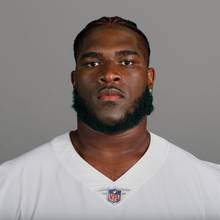 Tyler Booker72Grade
Booker put together a solid rookie campaign, starting 14 games at right guard after exclusively playing left guard at the collegiate level and missing three games with a high-ankle sprain. Booker is a massive interior blocker with very good width, length and heavy hands. He already understands how to maximize his frame in pass protection. He plays inside-out on rushers, funnels them into his body and uses his stout anchor to engulf most competition once contact is established. His size, strength and physicality allowed him to hold up against premier competition such as Jalen Carter. However, clean losses still showed up when his hands were late, causing him to get stood up and compressed into the pocket. His average redirect ability also shows up against loopers and movement on stunts. Booker is not a high-end mover, but he mitigates that inadequacy by running his feet, closing space and preventing defenders from stretching him into recovery mode. He already brings a nasty, tone-setting presence with the size, anchor and sustain skills to become a long-term quality starter if his hand-timing and processing skills continue to sharpen.
332DAL 11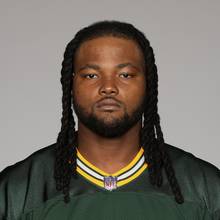 Rashan Gary73Grade
Gary developed into a quality, well-rounded edge defender over the last few years, primarily leaning on his unique athletic ability at 6'5" and 275 pounds. The 2024 Pro Bowler turns speed-to-power as a pass-rusher, then combines that trait with a good long-arm move and motor to apply pressure. In the running game, Gary doesn't make a ton of plays against offensive linemen, but he can beat tight ends and use his speed and movement skills to make tackles from the backside of zone runs.
259DAL 10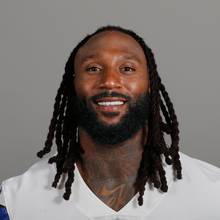 Malik Hooker76Grade
Aside from a toe injury that forced Hooker to miss six games last season, he was a steady presence in a not-so-steady defense in Dallas. Hooker is one of the best run-supporting safeties in the NFL with great play recognition, and he sorts through trash at a high level. There were times during coverage when he second-guessed himself and fell off the intended route, but his variety of coverage remains high, and he does a good job handling rotations and disguises. The secondary in Dallas will be revamped going forward, which should help Hooker return to his disruptive ways if healthy.
253DAL 9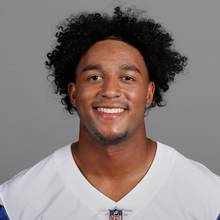 Dee Winters76Grade
The Cowboys might be the biggest benefactor of the San Francisco 49ers having too many linebackers on the roster, because getting Winters for just a fifth-round pick looks like a steal. He has the makings of someone who is about to burst onto the scene as a well-rounded, starting-caliber linebacker. The 2023 sixth-round pick is a good athlete and accelerates well, which helps him make tackles with his instincts against the run and close to collect stops in coverage. He's also decent at taking on blocks and has recorded nine passes defended over the last two seasons. Winters' awareness in coverage still needs improvement, but look for him to make a name for himself in Dallas this season.
243DAL 8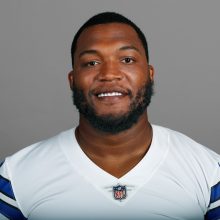 Kenny Clark76Grade
Clark is the most versatile interior defensive lineman in the NFL, as he could be seen anywhere from a 0-technique nose tackle to a 5-tech defensive end on the Cowboys' defensive line last year. The three-time Pro Bowler may not be as impactful as he used to be, but Clark can still make plays from multiple alignments and in both phases of the game.
162DAL 7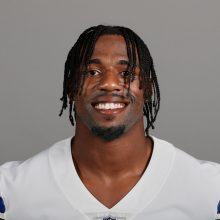 Jalen Thompson79Grade
The Cardinals used Thompson in various ways to cover holes in their defense (due to injury) and to get more defensive backs on the field. While he can come down in the box, his size and ability are better suited to split field or post safety. He's a sound tackler and plays with play recognition and recovery skills on top of a defense. Thompson matches routes with the quarterback's eyes well and triggers downhill when the throwing motion starts. He and Budda Baker have been one of the best safety tandems in the NFL over the past few seasons, and now he's headed to Dallas to help shore up a defense that desperately needs it.
160DAL 6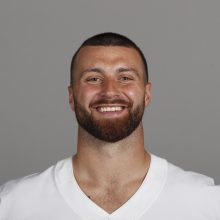 Jake Ferguson79Grade
One of the most dangerous seam weapons in the NFL, Jake Ferguson continues to showcase his value with quarterback Dak Prescott. He has a great feel for the top of routes, whether using physicality or footwork, and gets his head around in a hurry to locate the ball. Ferguson's ball skills make him a fantastic red-zone threat and a trusted player through contact. He's not out there to block much, but he gets the job done and, on the move, provides kick-out blocks for the offense. Ferguson caught more balls and touchdowns than at any point in his career and is poised for another explosive year with the same offense going forward.
49DAL 5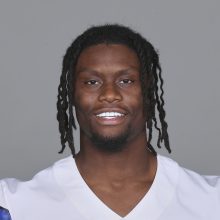 George Pickens87Grade
George Pickens was drafted in the second round but clearly was a first-round talent. He is coming off a career season with the Cowboys, in which he caught 93 receptions for 1,429 yards and nine touchdowns. Pickens raised the floor and ceiling of the Cowboys' passing offense. He had stretches of dominant play and fared well against top corners on the perimeter. Pickens proved he is capable of putting up WR1 numbers, and this was alongside an established star, CeeDee Lamb. Pickens had a stellar season with good route running, great hands, and strong after-the-catch ability. He did it all in 2025.
48DAL 4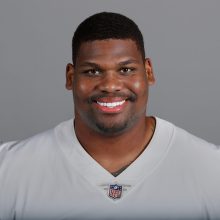 Quinnen Williams87Grade
Williams primarily lines up as a 3-technique (outside shoulder of the guard) but made plenty of plays from several alignments when splitting time between the New York Jets and Dallas Cowboys last season. The four-time Pro Bowler consistently dictates the rep when working against the run regardless of where he is playing. When rushing the passer, Williams' strength, motor and active hands make it difficult for offensive linemen to anchor against his bull-rush. He did have a down year statistically, with a career-low 2.5 sacks, but his quickness and unique athleticism showed up more in Dallas and helped the 28-year-old win more frequently than he did earlier in the season.
45DAL 3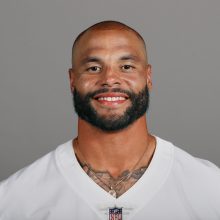 Dak Prescott87Grade
Dak Prescott deserves more credit and praise as one of the league's top signal-callers. He is coming off his fourth 4,000-yard passing season. He is entrusted with carrying the Cowboys' passing offense with his arm, and he answers the bell more often than not. Prescott is a highly accurate passer in and outside of the pocket. When protected and with high-caliber weapons at his disposal, he will put up All-Pro numbers. The Cowboys put their offensive fate into Prescott's hands, and he delivers.
42DAL 2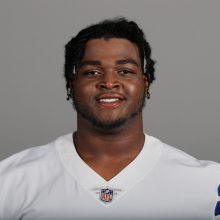 Tyler Smith88Grade
Smith produced another high-end season in 2025 despite kicking out to left tackle for the final three games. His game is built on elite, arresting play-strength, giving him the ability to latch, clench and end reps on command in a way few guards can match. Smith's anchor is one of football's best, and his ability to generate force through the ground allows him to absorb power, stop momentum and reset the terms of the rep quickly. He still has moments where he bites, drifts into oversets or lands his outside hand down the middle of rushers, creating quick edge access, but his movement skills and recovery strength usually prevent those losses from becoming routine problems. In the run game, Smith can uproot and displace down linemen at the point of attack, open lanes with raw force and deliver rare knockout blows on linebackers when climbing or releasing into space. Remaining refinement is necessary with his leverage maintenance and timing against slippery defenders, who can access his edges during the drive phase when he is late to re-leverage. Smith is not a fully pristine technician, but his power, anchor, recovery traits and impact-block ability keep him firmly in the top tier among guards.
36DAL 1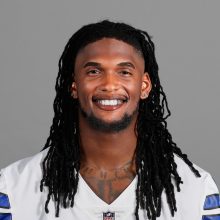 CeeDee Lamb89Grade
CeeDee Lamb has been the life force of the Dallas Cowboys' passing offense for a few years now. Finally, they gave him an equal running mate in George Pickens. Lamb is a do-it-all playmaker for Dallas. Whether he's running NBA crossover routes to fool and lose his defender or making great plays after the catch. Lamb is a great option to have as your offense's WR1. He aligns and makes plays from various positions within the formation. Lamb battled some concentration drops last season, which needs to be cleaned up this season. Nonetheless, he's one of the league's premier and most versatile playmakers.