 Every San Francisco 49ers player in the NFL 1000, graded and ranked by the B/R Scouting Department. Search the list or cut it by position. Rookies to be graded separately.Player photos: AP Images
961SF 34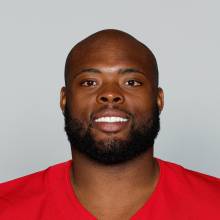 Robert Jones55Grade
Jones missed all of the 2025 campaign after suffering a broken bone in his neck. He then signed a one-year deal with the 49ers this offseason. His projection is largely tied to his 2024 tape with the Miami Dolphins, where he started 17 games and showed the strength, power and physicality that provided projectable upside. Jones is a thick, heavy-handed guard with a firm anchor and real people-moving ability when he catches defenders on angle-drive blocks or works downhill. He can also provide pocket-clearing force when uncovered. Movement and control are limiting factors. False steps and adequate athletic ability leave him late on backside zone tracks, while his aggressive pass-protection approach shrinks the margin for error with leverage and strike-timing. If healthy, Jones gives the 49ers useful depth, strength and physicality, but his best fit remains as a backup guard who can spot start in a downhill, quick-game/play-action structure.
939SF 33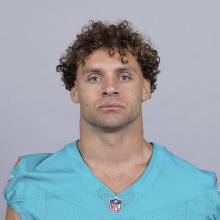 Ashtyn Davis57Grade
Miami was not kind to Ashtyn Davis as he played more snaps than at any point in the last three years, started more games than ever before in his career, and had more on his plate. He looked uncomfortable in space, was caught flat-footed numerous times, and didn't read routes consistently in coverage. Davis missed too many tackles and was an unreliable safety valve for the Dolphins' defense. It was a year Davis will want to forget, in hopes that he can rebound on a different team.
927SF 32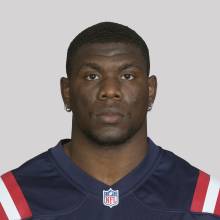 Keion White57Grade
Putting White into the edge bucket doesn't quite do his skill set justice, as the Georgia Tech product has been known for his unique versatility since his college days. Also, while the 2023 second-round pick is still figuring it out against the run, he may have found a niche as an interior pass-rusher after getting traded to the 49ers halfway through last season. So, the 6'5", 290-pound defensive lineman could be making a slight position switch moving forward.
866SF 31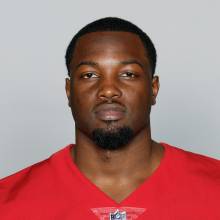 Tatum Bethune60Grade
The sample size for Bethune is small with just nine starts in two seasons. Also, there's the question of how healthy he is after tearing a groin right before the playoffs. But the 2024 seventh-round pick did show some impressive speed and movement skills to beat offensive linemen to the spot and/or make them miss with a shoulder dip move against the run. However, his eyes in coverage need a lot of work before he's able to be a full-time starting linebacker. On top of getting healthy, of course.
859SF 30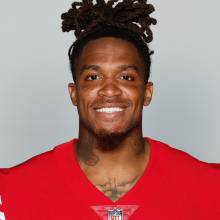 Demarcus Robinson60Grade
Demarcus Robinson is an established, capable veteran wide receiver. He comfortably fills the WR3/4 role and offers instinctive route-running. Robinson thrives working in the middle of the field on dagger concepts and deep in-breaking routes. As a result, he fit the 49ers' system well, being fearless between the hashes and running routes in sync with their quarterbacks. He doesn't offer much after the catch or winning the vertical plane, but he's a steady eddy veteran.
853SF 29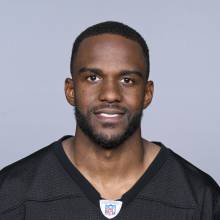 Corliss Waitman60Grade
Waitman quietly served as a steady presence for the Pittsburgh Steelers' special teams over the last two seasons. To be fair, the 31-year-old Belgian native took a slight step back in 2025. Waitman's average yards per punt and net punting average decreased. Though his average hang time increased. He also pinned opponents inside the 20-yard line a career-high 34 times. With Cameron Johnston returning to the Steelers, Waitman left and now has the upcoming season to show he can be San Francisco's long-term punter.
829SF 28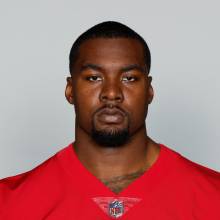 Mykel Williams61Grade
Williams' rookie season was cut short by a torn ACL right at the halfway point of the campaign, which is unfortunate because it looked like he was starting to put it together as a run defender. The 2025 11th overall pick started to show some impressive edge-setting ability during his last four or five games, using his long arms to get extension and escape blocks from offensive tackles. However, the Georgia product was very one-dimensional as a pass-rusher, winning only with power, and the pressures were few and far between.
735SF 27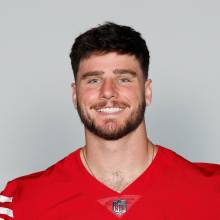 Luke Farrell64Grade
Luke Farrell has to do a lot of the dirty work for the 49ers offense, and he's happy to do it. From pass blocking to lead blocking on an outside pitch, he executes a number of different blocks and is the "blocking" tight end on the roster, not named Kittle. He shows great timing on double teams, takes smart angles to the second level or on pulls to give the back a lane to run, and holds his own in one-on-ones. Farrell is a reliable checkdown option with solid hands, but not much more in the passing game.
718SF 26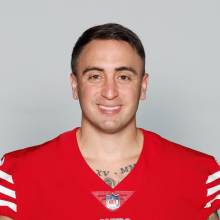 Eddy Piñeiro64Grade
Piñeiro earned the opportunity to kick for the Niners this fall after joining the team heading into Week 2 of last season. The veteran specialist, who bounced between six different teams prior to his latest stop, replaced a former third-round draft pick in Jake Moody because of the young kicker's maddening inconsistency. Piñeiro posted a career high 96.6 field percent conversion rate—not including the 2021 season when he appeared in only five games—missing only one attempt beyond 50 yards. As a result, the 30-year-old signed a new four-year contract extension this offseason. Though a little more consistency after missing four extra points would be beneficial.
705SF 25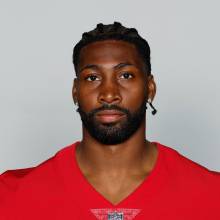 Nate Hobbs64Grade
After being forced into playing boundary corner more than anticipated for the Packers, Nate Hobbs played more nickel down the stretch and found his groove. He's a very aggressive player in all phases, and it shows up against the run, sifting through traffic and working to shed blocks. His man-coverage tools rely on contact and quick reaction time to stick with receivers. Hobbs isn't as comfortable in zone coverage, but he will come downhill to make a hit. The Packers released him after signing a large deal last offseason and will be looking to right the ship with the 49ers.
626SF 24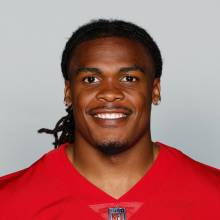 Ji'Ayir Brown66Grade
A more comfortable player near the line of scrimmage, Ji'Ayir Brown goes from making an excellent defensive play to a head-scratching one at a moment's notice. He's shown the potential he had coming out of Penn State and loves to trigger downhill with bad intentions, but in space he takes poor angles to the football and loses track of his responsibilities. Brown has flashed coverage playmaking with a couple of interceptions against the Panthers and six passes broken up last season; however, there wasn't enough consistency in his game to be confident in him when the ball was in the air. He enters a make-or-break season with the 49ers with a lot of questions swirling about his future.
602SF 23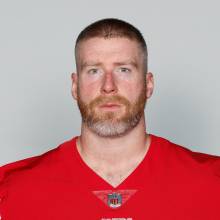 Jake Brendel67Grade
Brendel remains a useful overachiever at center, winning with quickness, efficiency and timing rather than size or raw power. He is undersized, but his movement patterns are clean enough to consistently reach landmarks, fit with proper leverage and shield defenders in a way that works inside Kyle Shanahan's balanced, rhythm-based offensive structure. In the run game, Brendel is more effective than his frame suggests as the drive man on double-teams and combination blocks, where he can deliver a surprisingly firm punch into already-engaged down linemen before climbing, while being effective on reach blocks. He also has enough burst to intersect second-level targets when the angle is clean. In pass protection, he can sort games, stay in phase and use timing, leverage and quick hands to survive most controlled reps, but the limitations show up when he is isolated late. Brendel can struggle to hold ground against power, bounce off contact and allow separation or leakage when defenders work through his frame. His quickness, awareness and system fit keep him functional, but the lack of mass and anchor strength leave him closer to a capped starter than a difference-making center.
558SF 22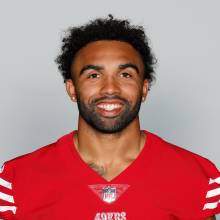 Christian Kirk68Grade
Christian Kirk battled a nagging hamstring injury that forced him to miss a few games last season for the Texans. On the field, Kirk displayed his ability to play all over the formation, win with his route running, and show good football IQ. He is a good addition to a receiving room, if healthy. Kirk doesn't have the same athleticism as he did at the earlier stages of his career, but he is still capable of winning after the catch. He is a quality veteran receiver who can help push the passing offense along in his role, working in the short and intermediate parts of the field.
541SF 21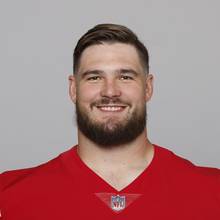 Colton McKivitz68Grade
McKivitz built upon his late 2024 improvement with the most consistent season of his career last year, settling in as a functional right tackle for the 49ers. His game is rooted in efficiency, positioning and hand usage more than standout physical traits. McKivitz is broadly built with solid play-strength and enough short-area quickness to reach run-game landmarks on time, create quick leverage and stay on schedule as a positional blocker. That same efficiency translates to pass protection against tighter alignments or when San Francisco uses help to funnel wider rushers back into his grasp. His range to expand set points against wide alignments is only adequate, leaving him stressed by high-side rushes when he cannot win early with his hands. Late inside counters can also challenge his posture and balance near the top of the pocket. McKivitz is not a high-ceiling tackle, but his technical growth, independent hands and fit within the Niners' structure have made him a useful homegrown starter.
522SF 20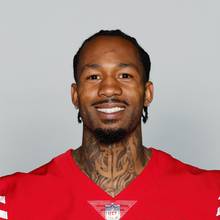 Jack Jones69Grade
The talent has always been there for Jack Jones, but he's been the picture of inconsistency throughout his career. He took on the Miami Dolphins' scheme change for himself and got off to a rough start before settling in, limiting busted coverages and being stickier in coverage. He does better when he can match routes to the quarterback with his eyes in zone, which allows him to break on throws more cleanly. Jones struggles when the receiver stacks him at any point in the route, and there are times when it appears he loses interest in a rep. Consistency is his enemy.
456SF 19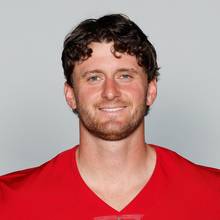 Jake Tonges70Grade
With George Kittle missing a good chunk of the regular season due to injury, Jake Tonges had to step up. He handled that task with maturity, went on to have his best NFL season, and showed the 49ers he was worth keeping around. Tonges gets the job done as a blocker, but wasn't asked to carry the bulk of the blocking work. He's a receiving option with the tools to catch the ball and get upfield quickly and efficiently to maximize space. He flashed some impressive ball skills with highlight grabs throughout the season, but he isn't a matchup problem at the position. Tonges is a capable receiver and proved to be a reliable target when called upon.
449SF 18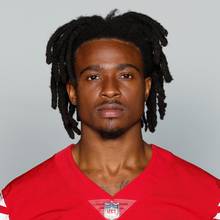 Renardo Green70Grade
Playing a physical brand of press-man coverage, Renardo Green has been a consistent force for the 49ers' defense. He rarely missed tackles last season, was sticky in man coverage (outside of some double moves), and made it difficult for opposing quarterbacks to complete passes downfield. He had some coverage busts and confusion in zone reps, but identified routes unfolding well and broke up 10 passes last season. He'll need to clean up his holding in man coverage going forward, but Green is on the path to becoming a good starting player in the NFL.
407SF 17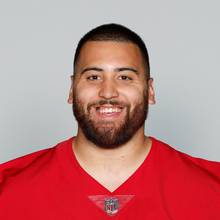 Dominick Puni71Grade
Puni pieced together another quality season in 2025, playing every snap for the second straight year and rebounding after a slower start that was partly tied to a preseason knee injury. Initially, the injury appeared to sap some of his ability to brace, absorb force and generate his usual power, but his play stabilized as the season progressed. Puni has a square, sturdy build with good linear explosiveness, foot quickness and enough play-strength to match up physically with most competition. His best reps show the size, balance and power that made him such an encouraging rookie starter, with the ability to create movement in the run game and hold his ground in protection when his posture and timing were right. Inconsistency remains on the technical side. Tardy strike-timing and a wide base can cause his feet to stall, leaving him vulnerable to compression or late losses against longer, powerful rushers. Those lapses are balanced by commanding wins when his leverage and hand-timing are clean. Puni is still refining his positional leverage, weight distribution and strike consistency. However, his durability, traits and early-career play indicate a solid young starter with further growth potential.
338SF 16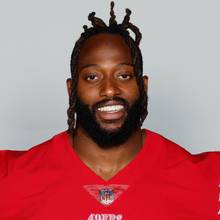 Osa Odighizuwa73Grade
Odighizuwa makes his money as a pass-rusher, where he has several ways he can win. The five-year veteran can push the pocket with a bull rush, has active hands and is a solid athlete beat interior offensive linemen with finesse moves. Against the run, he can be a decent penetrator but is more of a boom-or-bust type of player.
319SF 15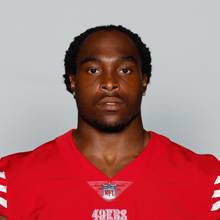 Upton Stout74Grade
Upton Stout plays nickel at 100 mph and shows you that you don't have to be a big guy to succeed in the NFL. Even though he's 5'9", he sorts through the trash in the run game, mixes it up at the line of scrimmage, and takes down tight ends well. He missed some tackles and had eight penalties last season (but wasn't flagged once in the last five weeks of the season, including the playoffs), but offers a good menu of coverage skills with excellent depth and closing speed. Rookies make mistakes, but as long as they play fast, they usually come out in the wash. Stout is very talented and is right at home in San Francisco's defense.
316SF 14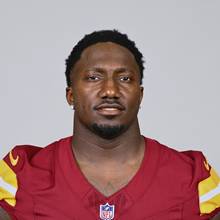 Deebo Samuel74Grade
Deebo Samuel is one of the more versatile receivers in the league. He impacts the offense's productivity in numerous ways. It's easy to get the football into his hands. He played well for the Commanders last season as the WR2 behind Terry McLaurin. Samuel caught 72 passes for 727 yards and 5 receiving touchdowns. He is back in San Francisco on a one-year deal, returning to the offense that drafted him and best maximized his skill set. He is capable of creating missed tackles either with power or elusiveness in space. Samuel's playmaking ability raises the floor of a passing offense, and with his versatility, it's easy for him to become the quarterback's best friend on third downs.
313SF 13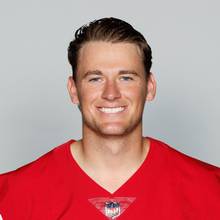 Mac Jones74Grade
Mac Jones will miss the mark and won't check most of the physical boxes, like arm strength/talent, size, and athleticism. If given a quality offensive line, an offensive scheme, and a reliable supporting cast, Jones can make things work and win football games. He displayed that last season in relief for injured Brock Purdy in San Fran. Jones started eight games and played well enough to keep the 49ers' playoff hopes afloat. His processing quickness and accuracy mesh well with Kyle Shanahan's offensive scheme, which highlights the mental superpowers of his quarterbacks. Jones will not raise the ceiling of the team's offense, but he can lift the floor a bit higher.
291SF 12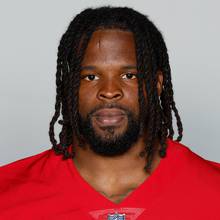 Dre Greenlaw75Grade
With his last two seasons being defined by injuries, Greenlaw is a tough player to project for 2026 and beyond. He did stand out as a run defender on a small sample size in Denver last season, but he was prone to a few lapses in coverage. It will be interesting to see how the 29-year-old bounces back during his return to San Francisco, as Greenlaw's evaluation is very fluid.
290SF 11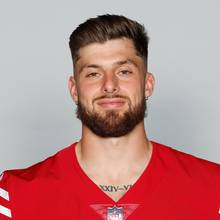 Ricky Pearsall75Grade
If not for injuries, the San Francisco 49ers might have found their No. 1 wide receiver in Ricky Pearsall. He missed seven games last season because of a PCL injury, which will need surgery and likely keep him from playing in 2026. That dampens his grade. Otherwise, Pearsall is a great fit for their scheme and quarterback room. He's a technical, detailed route-runner who separates from multiple alignments. He's also great at attacking the corner's leverage and breaking away at the top of his routes. His football IQ is evident in his ability to diagnose post-snap coverages quickly and stay on the same page with the quarterback. His hands are strong and reliable, tracking the football and snatching it out of the air.
286SF 10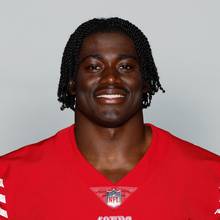 Malik Mustapha75Grade
The term "shot out of a cannon" was created for guys like Malik Mustapha. When he makes up his mind to trigger, he's going as fast as he can in that direction and looking to lay a hit on someone. He's a rangy post safety and played in a Cover Three and Cover One look often for the 49ers defense as the lead communicator. His aggression will take him away from his responsibilities and lead to missed tackles, but they've collected this type of player in San Francisco for a reason. He can blitz, create tackles for loss, and jar the ball loose with collisions. A truly fun player to watch move on a football field.
262SF 9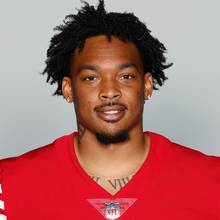 Deommodore Lenoir75Grade
One of the hotter heads at the position, and it can get him into trouble, Deommodore Lenoir became a full-time outside presence for the 49ers' defense last season. His willingness to tackle helps him in run support and in single coverage on bigger-bodied players, and he brings a well-rounded game to the boundary. Consistently getting good depth and recognizing routes in zone, and creating tough catches for receivers, Lenoir was targeted at the lowest rate of any outside corner in 2025, according to NFLPro. He must clean up the holding/physicality penalties if he's going to take another step next season, though.
255SF 8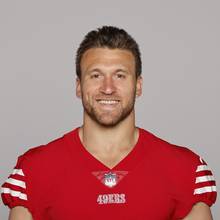 Kyle Juszczyk76Grade
Kyle Juszczyk is the best fullback in the NFL. He is a versatile offensive Swiss Army knife. Juszczyk lines up all over the 49ers' formation, as an H-back, move tight end, and even in the slot. He is one of the best lead blockers and consistently seals lanes for his running backs. His usage wasn't the same in 2025, but his importance and value don't change.
225SF 7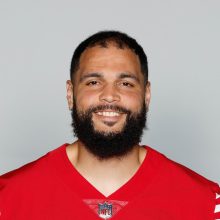 Mike Evans76Grade
Mike Evans is an established, consistent playmaker who brings reliability to the offensive passing game. Due to a hamstring, concussion, and a fractured collarbone, he played in eight of 17 games. When healthy, Evans wins one-on-one matches with veteran-level savvy and route-running. He lost a step athletically, but his football IQ and nuance at the position overcome those shortcomings. Evans remains a big target who can "moss" defenders at the catch point. He doesn't offer much in the yards after catch department. In the red zone, he continues to be a reliable offense-friendly target.
70SF 6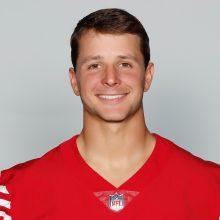 Brock Purdy85Grade
Brock Purdy is an established starting quarterback with plenty of postseason experience, including leading the 49ers to the Super Bowl. He played in only nine games last season due to multiple injuries. Purdy's proven to be the near-perfect quarterback for Kyle Shanahan's system. His game thrives on throwing with outstanding anticipation, accuracy, and timing. Purdy is an above-average athlete with good pocket quickness to create for himself whenever he senses pressure. He plays with immense heart and toughness, earning him a place among the NFL's winners. Purdy is a physically limited quarterback; he's on the shorter side of the height spectrum, and his arm strength is only average. His decision-making declined under heavy and consistent pressure last season. He's the prototype for high-end game manager and point guard-styled QB archetypes; you can win with those styles if your roster is built properly.
60SF 5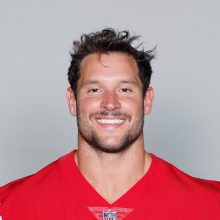 Nick Bosa86Grade
Nick Bosa was difficult to assess since he missed all but three games last season and sat out three contests during the prior campaign. However, the 2022 NFL Defensive Player of the Year previously built a big enough track record to rank and assume a baseline level of performance. As a pass-rusher, Bosa's hand-use is elite and where he primarily wins. He's also effective at turning speed-to-power, providing more juice off the edge than most expect. Additionally, the 2019 No. 2 overall pick's run defense is underrated. He has the strength to set the edge and escape blocks, while also showing enough athleticism to take advantage during the rare occasions he's unblocked.
29SF 4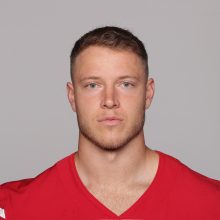 Christian McCaffrey90Grade
Christian McCaffrey is a defensive game plan changer. Opposing defenses would love to play more man coverage against the 49ers' offense, but when he is in the backfield, it's nearly an impossible feat. CMC is still a fantastic route-runner out of the backfield, and his ability to freeze and break second-level defenders' ankles as a receiver forces defenses to shift their game plan in real time. The combination of his vision, patience, and footwork in traffic is unreal. He doesn't have the same speed or burst as he did years ago. Health was a concern in 2024, but he played all 17 games in 2025. Somehow, some way, at this stage of his career, CMC is still a top-10 RB in the league.
21SF 3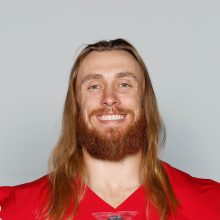 George Kittle92Grade
One of the most iconic players at the tight end position, George Kittle, went out on his shield last season after battling injuries and then tearing his Achilles tendon in the Wild Card round. The exuberant nature with which he plays the position doesn't just make him fun to watch; it's extremely effective. A true do-it-all tight end, Kittle maxes out effort as a blocker with physicality and high football IQ while doubling as a yards after catch demon. Like crossing a Gremlin with the Energizer Bunny, he's a truly unique player in the NFL, and we're all better for getting to watch him on the field.
16SF 2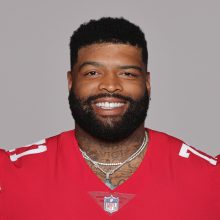 Trent Williams92Grade
Williams remained one of the league's defining offensive linemen in 2025, playing 1,075 snaps—his most since arriving in San Francisco—while still performing at an elite overall level at an age where most tackles are long removed from starting-caliber play or even retired. The pass-protection profile showed more volatility than during his peak years, with a few more clean losses and moments where rushers could set him up and slip across his face. Even so, Williams remained a high-end protector capable of handling top competition on an island. His run-game value continues to be unmatched, too. Williams remains the league's best run-blocking tackle because of his rare blend of size, explosiveness, range and power, allowing him to erase targets on the move, command the point of attack and seal the backside with his signature snatch technique. He is no longer quite as airtight in protection as he was at his apex, but his physical tools, play-strength and run-blocking dominance still make him one of football's most valuable tackles.
13SF 1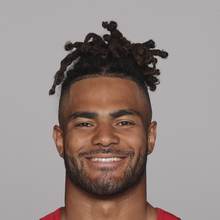 Fred Warner93Grade
Despite only playing in six games last season due to a broken ankle, Warner remains the NFL's best linebacker, because he plays the position almost perfectly. Against the run, the four-time All-Pro has great instincts and the athleticism to make unblocked tackles near the line of scrimmage. He also uses his hands well to disengage when forced to take on blocks. In coverage, Warner's acceleration and speed allow him to be effective at clicking and closing in his area, while displaying elite range to help teammates or cover up missed tackles. Additionally, he brings excellent ball skills to the position, with 56 career passes defended over eight seasons.